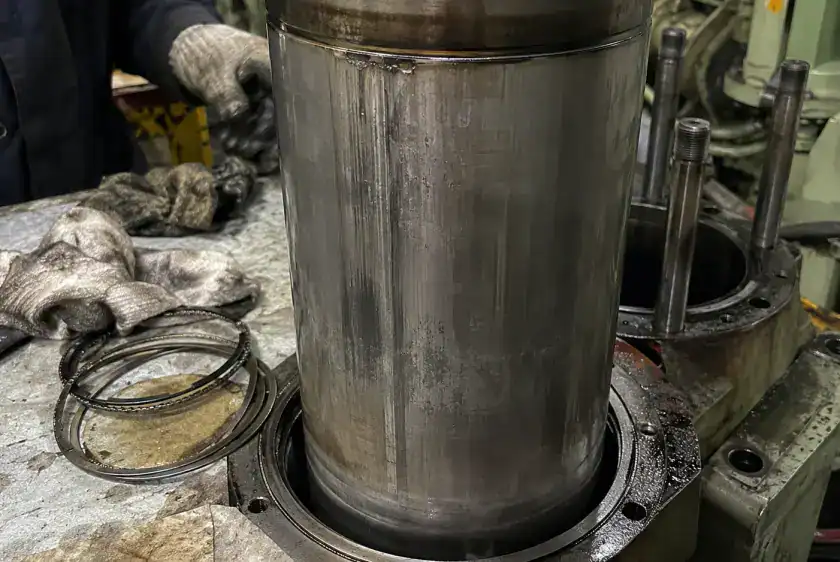

A vessel came out of drydock with a freshly overhauled main engine. New fuel injectors. Reground fuel pump plungers. Cleaned combustion chambers. The chief engineer signed off the work as routine maintenance. The class surveyor at the next port asked for the EIAPP certificate and the engine Technical File.
The parts fitted were not listed in the Technical File. The engine now had a compliance question that nobody had planned for.
This is not a theoretical problem. It happens quietly, across fleets, during work that crews and superintendents consider standard.
What the NOx Certificate Actually Covers
Every marine diesel engine over a certain power output requires an Engine International Air Pollution Prevention certificate — the EIAPP. This certificate confirms that the engine, as built and as configured, meets the NOx emission limits that apply to its construction date and the areas it operates in.
The certificate does not cover the engine in isolation. It covers the engine in a specific configuration. That configuration is documented in the engine’s Technical File.
The Technical File lists the approved components — fuel injection equipment, timing settings, turbocharger type, air system configuration, and other parameters that affect combustion. It is the record of exactly what the engine looked like when it was tested and certified.
When you change something that is listed in that Technical File, you may be changing the certified configuration.
What “Substantial Modification” Actually Means
The NOx Technical Code defines the trigger for re-certification: substantial modification. This is any change that could cause the engine to exceed its certified NOx emission limits.
The definition is deliberately broad. It includes changes to fuel injection systems. It includes changes to the combustion chamber configuration. It includes changes to camshaft timing, air system design, and other parameters that affect how the engine burns fuel.
What it does not include is identical replacement of worn parts. If you replace a worn injector nozzle with the exact same nozzle — same part number, same geometry, same approved specification listed in the Technical File — that is maintenance. The certified configuration has not changed.
The problem appears when the replacement part is not identical. A different nozzle design. A different spray pattern. An upgraded component that performs better but is not listed in the Technical File. The fact that the new part is better does not protect you. What matters is whether it matches the approved configuration.
The Non-Obvious Part: Upgrades Are the Trap
Routine replacement of worn parts is low risk. The dangerous territory is upgrades.
Engine manufacturers regularly release improved components. Better fuel injectors. Updated pump elements. Modified combustion chamber inserts. These upgrades often improve fuel consumption and reduce emissions in practice. But if they are not yet listed in the engine’s Technical File as approved alternatives, fitting them creates a gap between the certified configuration and the actual configuration.
The superintendent approves the upgrade because it looks like an improvement. The chief engineer fits it because the manufacturer says it is compatible. Nobody updates the Technical File because nobody knows that is required.
The class surveyor then finds a discrepancy between the Technical File and the actual fitted components. At that point, the path forward involves re-certification, which requires testing and documentation that was not budgeted and was not planned.
The new amendments to the NOx Technical Code that entered into force in September 2026 clarify the re-certification process for exactly this situation. They provide a structured path for engines that have been substantially modified or need to be certified to a different NOx Tier. But the path still involves cost, time, and documentation. The easier approach is to avoid creating the problem in the first place.
What to Check Before Your Next Overhaul
Three questions before any engine work that involves replacing components.
First, is the replacement part listed in the engine’s Technical File? Not just compatible according to the manufacturer — specifically listed as an approved component in the Technical File for your engine serial number. These are not always the same.
Second, if you are fitting an upgraded or improved part rather than an identical replacement, has the manufacturer issued a Technical File amendment that covers it? Engine manufacturers issue these amendments when they want customers to use improved components without creating a compliance gap. Ask specifically whether the amendment exists before fitting.
Third, if your vessel operates in or near the Norwegian Sea, Baltic, North Sea, or North American ECAs, the consequences of a non-compliant engine configuration are more serious. Port state control in these areas check NOx documentation. A Technical File discrepancy in an ECA port is a different situation than one in a port with lighter enforcement.
The Spare Parts Question
This regulation makes the source of your spare parts more important than many operators realise.
An OEM part comes with traceability. The manufacturer can confirm whether a specific part is listed in the Technical File for your engine. Non-OEM parts often cannot provide that confirmation — not because the part is inferior, but because the manufacturer of that part has no relationship with your engine’s certification documentation.
This does not mean non-OEM parts are always wrong. But it means the verification burden sits with you. You need to confirm that the part matches the approved specification in your Technical File, not just that it is mechanically compatible.
*The EIAPP certificate protects the vessel as long as the engine matches what is in the Technical File. Every overhaul is an opportunity to drift from that match — or to confirm it.*